Operations & BuylistsSeptember 2026• 9 min read
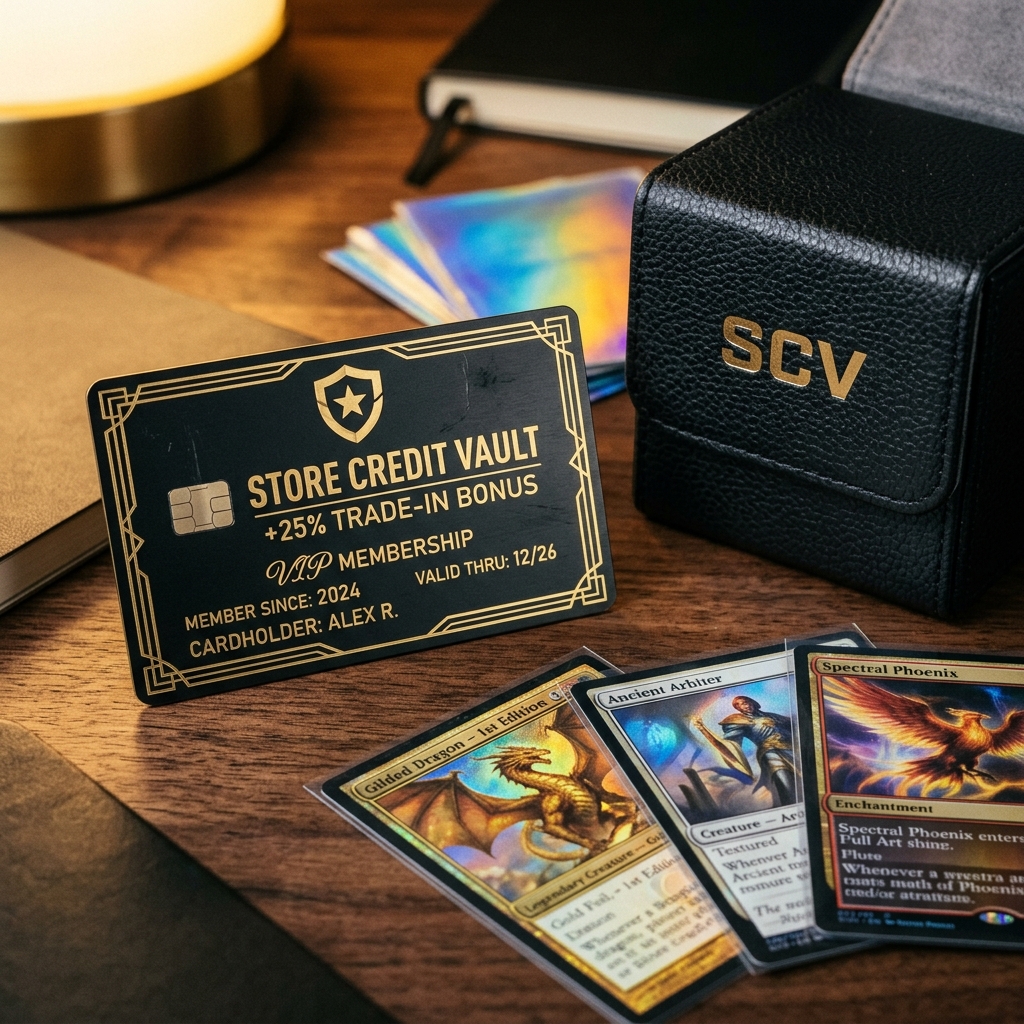
1. The Cash Drain of Traditional Card Buylists
When a customer brings in a $1,000 collection and demands cash, you have to hand over $600 from your operational bank account. Your bank balance drops, and you must wait weeks or months to resell those cards to recover your capital.
Top card retail empires don't drain their cash reserves to acquire cards. Instead, they use the Store Credit Flywheel.
2. The Psychology of the +25% Store Credit Multiplier
Consider the offer given to a collector selling a collection valued at $1,000 market price:
- Option A: $600 in Cash
- Option B: $750 in Store Credit (+25% Bonus)
To the collector, Option B feels like $150 of free money! Over 75% of collectors choose store credit every single time.
3. The Double-Margin Profit Loop for the Store
Here is the financial magic of what actually happened:
- You acquired $1,000 worth of singles without spending a single dollar of cash from your bank account.
- The customer spends that $750 store credit on sealed booster boxes, tournament entry fees, or singles in your store.
- Because you purchased that retail merchandise at wholesale distributor cost (often 60% of MSRP), that $750 credit only cost your business ~$450 in actual inventory cost!
- Net result: You acquired $1,000 in singles for an effective cost of $450—an astonishing 55% net profit margin!
4. Unifying Store Credit Across Online & In-Store POS
The biggest flaw of generic store credit apps is that online credit doesn't work at the in-store register. Aeethod's platform unifies collector balances across your website and physical counter POS in real time. Learn more in our Operations Systems.