Competitor AnalysisSeptember 2026• 11 min read
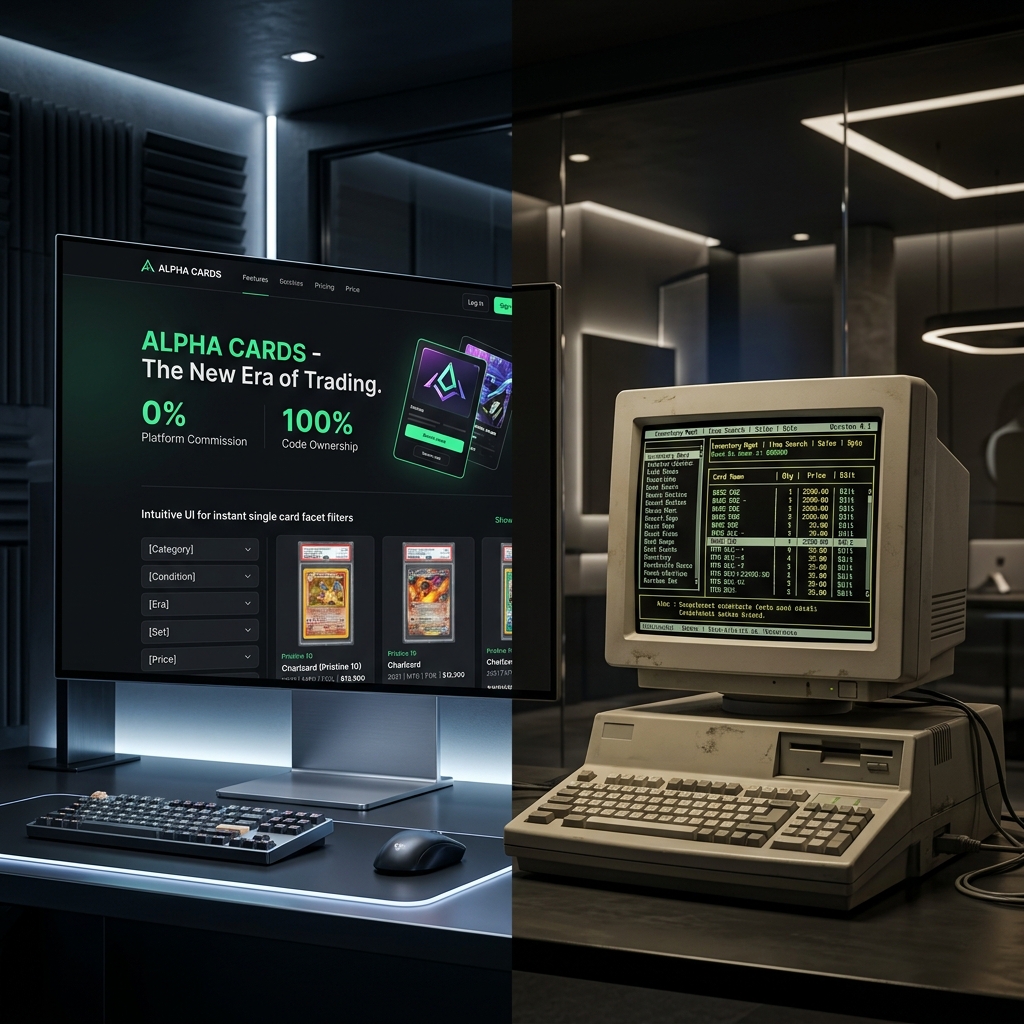
1. The Real Problem Card Shops Face with Generic Retail Tech
Running a trading card game (TCG) store is fundamentally different from selling t-shirts or coffee mugs. A single local game store easily manages 50,000 to 200,000 individual cards across Magic: The Gathering, Pokémon, Yu-Gi-Oh!, One Piece, and Lorcana. Each card has multiple condition grades (Near Mint, Lightly Played, Moderately Played, Damaged), foil and non-foil finishes, languages, and rapid market price changes.
For years, card store owners were forced to choose between two imperfect options: rent an expensive, clunky specialized TCG SaaS platform like BinderPOS or CrystalCommerce, or try to hack together a generic Shopify store with 10 different buggy plugins. Today, high-growth card shops are taking a third path: owning their own custom headless commerce platform engineered specifically for collectibles.
2. BinderPOS Breakdown: Features, Hidden Fees, & The Rental Trap
BinderPOS has become one of the most visible platforms in the card community because it bundles point-of-sale (POS) hardware with TCGplayer catalog syncing. However, as stores scale, serious friction points emerge:
- Hefty Monthly SaaS Rent: Monthly subscriptions run from $299 to over $800/month depending on SKU volume and features, plus onboarding fees and transaction charges. Over 3 years, you spend $15,000 to $30,000+ just to rent your website.
- Sluggish Card Search: Because BinderPOS is built on standard Shopify themes with heavy script layers, catalog search often takes 2 to 4 seconds to filter cards by set or rarity. In e-commerce, every second of delay drops conversion rates by 7%.
- Zero Code Ownership: You do not own your storefront codebase. If BinderPOS raises prices, experiences outages, or you decide to leave, your website shuts down and you have to rebuild from scratch.
3. CrystalCommerce Breakdown: Legacy Tech & Weekend Drop Crashes
CrystalCommerce was an early pioneer in multi-channel card retail. While it has deep roots in the industry, its underlying architecture has struggled to keep pace with modern web standards:
- Outdated User Experience: The buyer-facing storefronts look and feel like websites from 2012. Today's modern collectors expect sleek, mobile-first interfaces with instant facet filtering and Apple Pay.
- Checkout Slowdowns During Big Set Drops: During high-traffic release weekends (such as a new Pokémon base set or Modern Horizons drop), legacy servers frequently experience lag, timing out customer carts and causing lost sales.
- Complex, Confusing Workflows: Store staff often report that simple tasks—like updating buy prices or managing trade-ins—require navigating convoluted legacy dashboards with steep learning curves.
4. TCGplayer Pro: The Free Option with a Steep Invisible Tax
TCGplayer Pro offers a store website for low or zero monthly subscription fees. While tempting for hobbyists, it comes with an invisible business trap:
- You Build Their Brand, Not Yours: Your site looks identical to every other TCGplayer seller. Customers remember "I bought it on TCGplayer," not your store's brand.
- The Commission Trap: While direct Pro sales have lower fees than marketplace sales, you remain trapped inside their ecosystem. If TCGplayer makes a policy change or adjusts seller requirements, your entire livelihood is vulnerable.
5. Side-by-Side Comparison Matrix
| Feature / Parameter | BinderPOS | CrystalCommerce | Aeethod Custom Platform |
|---|---|---|---|
| Monthly Software Rent | $299 – $800+/mo recurring | $300 – $750+/mo recurring | $0 / month (0% sales cut) |
| Code Ownership | No (Rented SaaS) | No (Rented SaaS) | Yes (You own 100% of the code) |
| Card Search Latency | 1,800ms – 3,500ms | 2,500ms – 5,000ms | Sub-35ms (Instant Edge Filter) |
| Variant Capacity | Subject to Shopify limits | Legacy database rows | Unlimited (300+ variants per card) |
| Inventory Sync Delay | 15 to 45 minutes | 20 to 60 minutes | Sub-2 Seconds (Zero double-selling) |
| Integrated Buylist Portal | Basic add-on | Complex legacy tool | Automated self-service portal |
6. Why Aeethod is the Definitive Solution for Card Shops
Aeethod does not sell you another monthly software subscription. We are an engineering studio that builds and deploys turnkey, sovereign e-commerce platforms that your store owns permanently.
- 100% Code Ownership: We build on modern Next.js and React. You own your code, your database, and your customer relationships. No one can ever shut your site down or raise your rent.
- Sub-35ms Card Filtering: Collectors can search 100,000+ cards and filter by expansion set, condition, finish, language, and grading slab in milliseconds with zero page reloads.
- Sub-2-Second Omnichannel Sync: When a card sells at your counter POS or on eBay, our real-time webhook mesh delists it from TCGplayer in under 1.8 seconds. Say goodbye to the double-selling nightmare forever.
- Transparent, Fixed Turnkey Pricing:
- Shopify TCG Kickstart: $3,500 – $4,800 (One-time investment · 2–3 weeks turnaround · Best for stores starting on Shopify).
- Custom TCG Commerce Platform (Flagship): $7,800 – $9,800 (One-time turnkey deployment · 4–6 weeks turnaround · You own 100% of the code).
- Advanced Omnichannel TCG System: $14,500 – $18,500 (One-time turnkey delivery · Includes automated buylist portal & live TCGplayer/eBay/POS sync).
Stop paying thousands of dollars every year renting a slow website. Explore our Custom Commerce Services or book a consultation with Aeethod's engineering team today.